Why Pompano Beach Tile Roofs Wear Out From the Underlayment First
Tile is built to shed the bulk of a storm, but it’s not watertight on its own. The underlayment beneath every tile is the actual waterproofing layer, and it’s the part exposed to trapped heat, humidity, and UV that bakes through gaps in the tile.
UV, Heat, and Humidity Break Down Felt Faster Here
Attic temperatures under Pompano Beach tile can regularly exceed 140°F during summer afternoons.
That heat cycles daily with overnight humidity, and it’s this constant expansion and contraction that dries out and cracks older felt-based tile roof underlayment years ahead of schedule.
How Long Does Tile Underlayment Last in Florida
Lifespan depends almost entirely on material choice, and how long does tile underlayment last in Florida is one of the most common questions we get from homeowners near Palm Aire and Cresthaven with original 1980s and 1990s roofs. Standard 30-lb felt tends to hold up for roughly 10 to 15 years in this climate, while modern synthetic and peel-and-stick systems can last 20 to 25 years or more under the same tile.
If your roof is original and older than 15 years, the tile roof underlayment is very likely past its functional life even if no one has told you.
For more detail on tile lifespan by material, see our breakdown on how long does a tile roof last in Florida.

Signs of Failed Underlayment Under Tile (Before Tiles Ever Crack)
Most homeowners don’t notice a failing tile roof underlayment until water shows up inside the house.
Watch for these signs of failed underlayment under tile:
- Brown or yellow ceiling stains that appear after heavy rain, then seem to dry out.
- A persistent musty smell in the attic, even with no visible standing water.
- Tiles that shift, slide, or feel loose after a storm with no wind damage visible from the ground.
- Granule loss or bare patches you can spot at tile gaps and valleys.
- Visible daylight or pinholes when viewed from inside the attic during the day.
- Soft, spongy spots on the roof deck when walked on during an inspection.
If two or more of these show up together, it’s worth having a licensed inspector look underneath the tile, not just at it.
Synthetic vs. Felt Underlayment for Tile: What Pompano Beach Roofs Need
When it’s time to replace, the material choice matters more here than almost anywhere else in Florida. Because all of Broward County sits entirely within the High-Velocity Hurricane Zone (HVHZ), using materials that carry a Miami-Dade NOA (Notice of Acceptance) or Florida Product Approval number isn’t just a good idea it proves your materials are legally rated for Pompano Beach’s strict building codes.
Synthetic vs. felt underlayment for tile comes down to durability against UV exposure and moisture resistance during our long, wet hurricane season.
Felt is the traditional, lower-cost option, but synthetic underlayment resists tearing and holds up longer under sustained heat.
Many Pompano Beach homeowners now upgrade to peel-and-stick underlayment for tile at relay time, since it self-seals around fastener penetrations and creates a stronger secondary barrier against wind-driven rain.
The Tile Roof Relay Process: Reusing Your Existing Tile
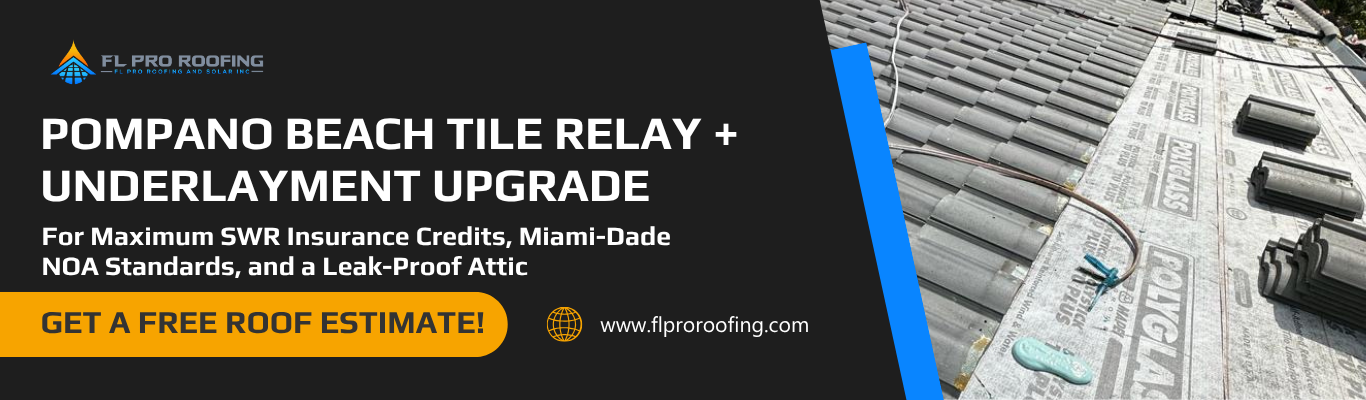
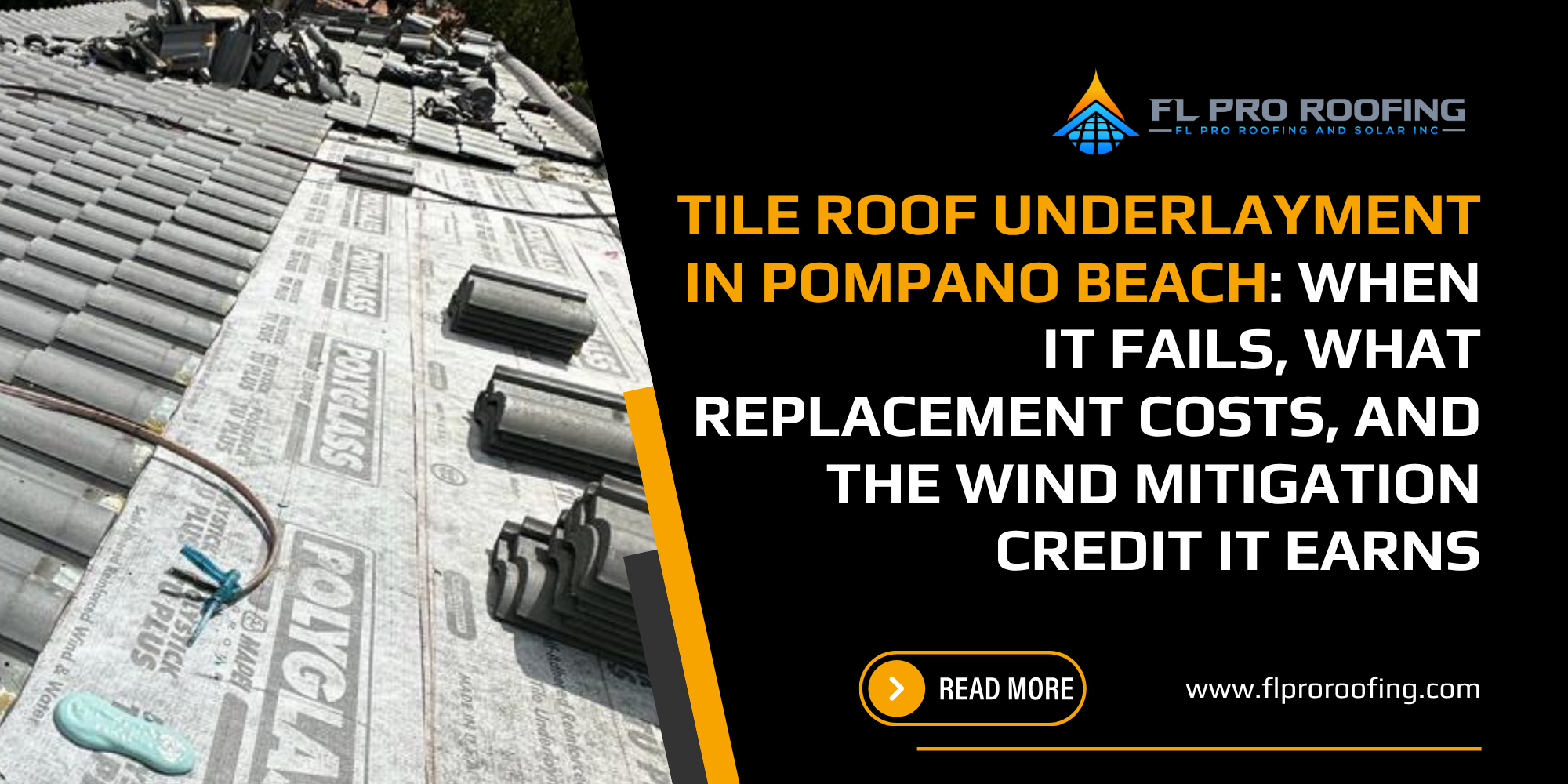
A relay is different from a full replacement because your existing tile comes back down on the roof once the new tile roof underlayment is installed.
Understanding tile roof relay cost starts with understanding the process itself:
- Tiles are carefully removed, inspected, and set aside for reuse
- The old underlayment is stripped completely off the deck
- The deck is inspected and repaired for rot or soft spots before anything new goes down
- New underlayment is installed, often with upgraded fastening patterns
- Original tiles are reinstalled, with broken tiles replaced as needed
This approach preserves the tile investment you already made while resolving the actual source of leaks.
For a full cost breakdown by tile type and roof size, check our Pompano Beach tile roof guide.
What Drives Tile Roof Underlayment Replacement Cost in Pompano Beach
Every roof prices out differently, and tile roof underlayment replacement cost depends on several variables specific to your home:
- Roof pitch and accessibility: steep or high roofs require more labor time.
- Tile type: concrete tile is heavier and slower to remove and reset than clay.
- Deck condition: any rotted plywood found during tear-off adds to scope.
- Underlayment material chosen: felt, synthetic, or peel-and-stick each carry different install requirements.
- Square footage and roof complexity: valleys, hips, and multiple roof planes add labor.
Getting a written, itemized estimate that separates labor, materials, and deck repair line items is the only reliable way to compare quotes accurately.
Secondary Water Resistance and Your Wind Mitigation Discount
New tile roof underlayment isn’t just a leak fix; it can directly lower your insurance premium. A secondary water barrier wind mitigation credit applies when self-adhering or approved SWR underlayment is verified on the OIR-B1-1802 form during a wind mitigation inspection Pompano Beach homeowners already schedule after roof work.
Here is the catch: To actually get that Secondary Water Resistance (SWR) insurance discount, the peel-and-stick underlayment must adhere directly to the roof deck, not just slapped on top of old felt. At FL Pro Roofing & Solar, our application goes straight to the deck. This crucial step differentiates us from cheap contractors who cut corners, and it ensures your roof actually qualifies for the savings.
Because Broward County sits entirely within the High-Velocity Hurricane Zone, Florida law requires insurers to offer this discount once it’s documented, so a relay done with the right underlayment can pay for itself through lower windstorm premiums.
Ready to pair a tile roof underlayment upgrade with a documented insurance credit? Request a free estimate from FL Pro Roofing & Solar today.
Choosing a Contractor for Tile Roof Underlayment Replacement in Pompano Beach
Not every roofer handles tile relays correctly, and broken tiles during removal are the most common complaint homeowners have after hiring the wrong crew.
A contractor experienced in residential roof replacement in Pompano Beach will stack and label tile by section, minimize breakage, and document deck condition with photos before covering it back up.
Ask any contractor directly how they handle broken tile replacement and whether they offer a written workmanship warranty separate from the manufacturer’s material warranty.
The Roof You Already Have May Just Need What’s Underneath It Fixed
Most Pompano Beach homeowners assume a leaking tile roof means a full replacement, but in most cases, the tile is fine, and the underlayment beneath it isn’t.
A relay resolves the actual problem, protects the tile investment already sitting on your roof, and can unlock an insurance credit you’re not currently receiving.
Waiting only extends the window where water keeps finding its way into your attic and ceilings.
Get a professional assessment before your next hurricane season closes in. Contact FL Pro Roofing & Solar to schedule a tile roof underlayment inspection with our licensed Broward County team. You can also find and review us directly on Google.